The bell rings at 3:30 PM, signaling the end of the traditional school day. For many children, this transition is seamless. Walk home, grab a snack, and find a quiet place to start homework.
But for a significant number of families in our urban centers, the hours between school and sundown represent a “gap” in the safety net. It is a time when the structured support of educators ends, yet the workday for many parents is far from over.
At Rosayo Children Foundation, we have learned that no single organization can catch every child who might fall through this gap. True child welfare isn’t a siloed effort; it is a collaborative weave.
When we look at the most resilient neighborhoods, we don’t just see individual families struggling alone; we see a “Village in the City” with a network of local businesses, faith-based groups, and grassroots organizers working in tandem to ensure no child is left invisible.
The Architecture of a Safety Net
In the field of nonprofit work, we often talk about “capacity building.” While that sounds like academic jargon, in reality, it is quite simple: it means making sure the community has the tools it needs to take care of its own.
When a local library partners with a food pantry, or a neighborhood gym opens its doors for after-school tutoring, the architecture of the community changes.
Research into social capital suggests that children who have at least three “non-parental” adults they can turn to for support are significantly more likely to avoid risky behaviors and stay engaged in their education.
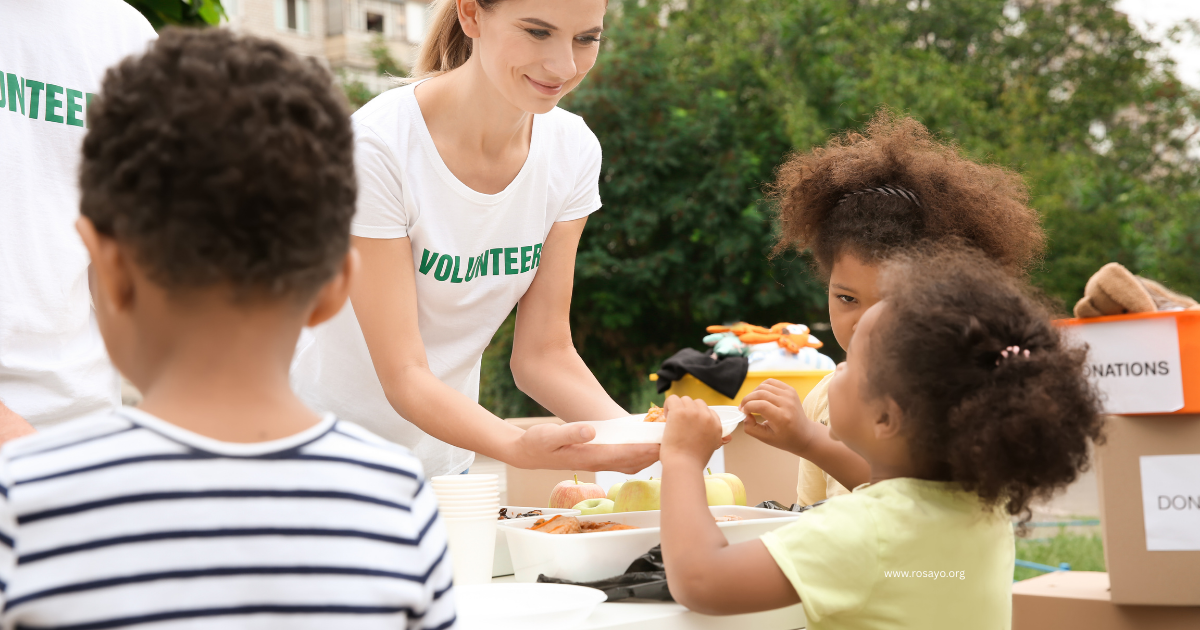
These adults are the “anchors” of the community. They are the barbers who check in on a student’s grades, the church volunteers who organize weekend meal bags, and the small business owners and churches who provide a safe haven for youth to gather.
The Power of Local Partnerships
Partnerships are the lifeblood of sustainable impact. For a foundation like Rosayo, working with existing local entities isn’t just a strategy, it’s an ethical choice.
It honors the expertise of those who have lived in these neighborhoods for decades. By layering our resources over the existing trust these local heroes have built, we create a more durable support system.
Consider the impact of a local community center that collaborates with a nutrition program. Instead of a family having to travel to two different locations to receive academic help and a healthy meal, the partnership brings the solution to them. This “one-stop” approach reduces the “poverty tax” on a parent’s time and dignity.
Human Impact: A Story of Shared Strength
We recently saw the power of this collaboration through the eyes of Mr. Henderson, a retired carpenter who transformed his small workshop into a community “maker-space” for local teens.
“I spent forty years building houses,” Mr. Henderson told us. “But I realized that the most important thing I could build now was a sense of belonging. When we started partnering with local youth mentors, the workshop changed. It wasn’t just about wood and nails anymore; it was about giving these kids a place where they were expected to show up, where they were respected, and where they could see that their community was invested in them. I’m just one man with a saw, but with the right partners, we’ve built a sanctuary.”
Mr. Henderson’s workshop is a perfect example of local-impact. By providing the space while others provided the mentoring and nutritional snacks, a holistic environment was created. This didn’t require a multimillion-dollar facility; it required a handshake and a shared vision.
Resilience Through Connection
Family resilience is often treated as an internal trait. Like something a family either has or doesn’t. But resilience is frequently an external product of a supportive environment.
When a mother knows that her child is safe at a partner-run after-school program, her own mental health improves. Her “toxic stress” levels drop, allowing her to be more present and emotionally available when the family finally sits down together at the end of the day.
This ripple effect is the true measure of success for any community initiative. We aren’t just looking for improved test scores or physical growth charts; we are looking for the strengthening of the social fabric.
We are looking for the moment a community realizes that they are not a collection of problems to be solved, but a collection of solutions waiting to be connected.
A Reflection for Our Community
As we look toward the future of our initiatives at Rosayo, we invite our partners, donors, and neighbors to ask themselves: Where can I be an anchor? You don’t need to run a foundation to create a safety net. You only need the willingness to collaborate and the humility to listen to the needs of the families next door.
The safety net is only as strong as its weakest link. By building local partnerships, we ensure that every link is reinforced by the strength of the collective. Together, we are proving that even in the busiest city, the “village” is alive and well.
Our Thoughts
At Rosayo Children Foundation, our goal is to be the glue between these vital community pieces. We believe that by fostering partnerships and encouraging community-engagement, we can create environments where every child feels seen, safe, and supported. The journey of child welfare is long, but when we walk it together, the path becomes much clearer.
Leave a Reply